There was a time when creators only needed one thing: a book, a course, a product, or a podcast. That single-product model still exists, but it is becoming less effective every year.
Audiences no longer engage with ideas in a straight line. They discover creators through short clips, podcasts, articles, newsletters, communities, tools, and conversations spread across platforms. A video leads to a newsletter. A newsletter leads to a podcast. A podcast leads to a book or course. Over time, people stop interacting with isolated content and begin entering a larger, connected world built around a central idea.
That world is an ecosystem brand.
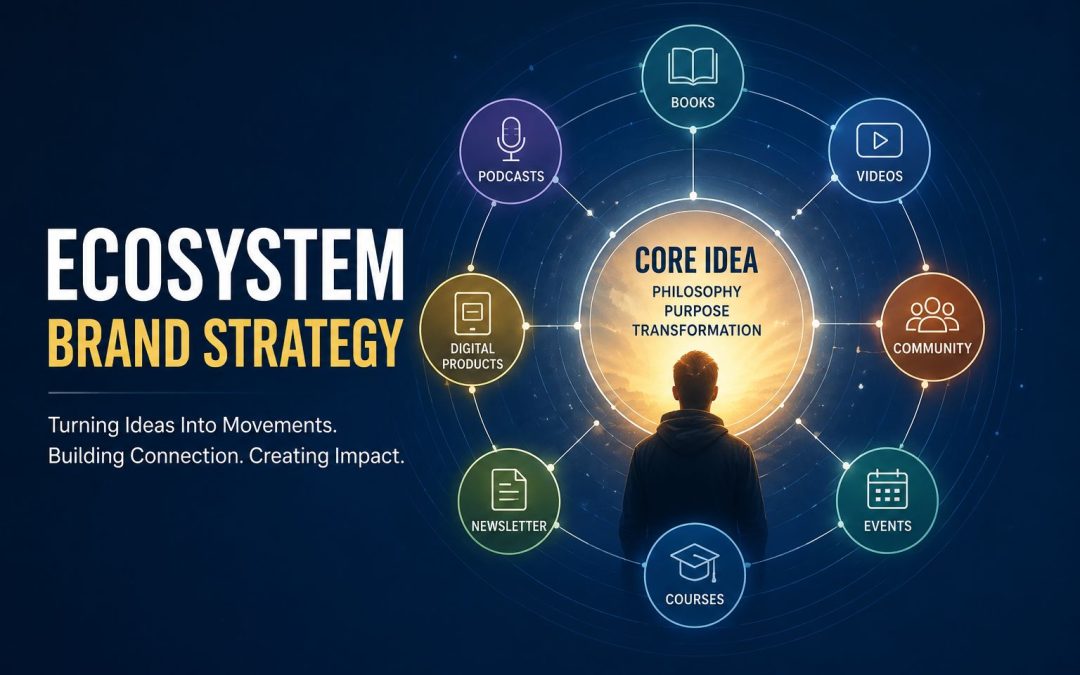
An ecosystem brand is not simply a business with multiple products. It is a connected network of ideas, experiences, platforms, resources, and learning environments that reinforce one another. The important distinction is connection. Most businesses create separate assets. Ecosystem brands create continuity. Everything feels related. Everything points somewhere deeper. Each part strengthens the others.
You can see this shift across modern creator culture — among authors, educators, coaches, independent media brands, and digital learning platforms. A book becomes a podcast. The podcast becomes a workshop. The workshop becomes a membership community. The community then shapes future products and conversations. At a certain point, the creator is no longer just selling individual products. They are building an environment people want to stay inside.
What Is an Ecosystem Brand?
An ecosystem brand is built around a central philosophy rather than a single product. That philosophy might focus on personal growth, business, education, creativity, wellness, finance, reinvention, productivity, storytelling, or identity. The formats are secondary. What matters is the consistency of the underlying idea.
Traditional brands operate transactionally: sell the product, complete the service, and move on. Ecosystem brands work differently. They are designed for long-term engagement. Audiences interact with the same ideas through articles, podcasts, books, communities, workbooks, courses, live events, learning resources, AI tools, and guided programs. Over time, recurring themes, language, frameworks, and values create deep familiarity and trust.
This is why creators like Mel Robbins have become far more influential than many traditional media personalities. Their books, podcast, speaking appearances, social content, educational tools, and audience conversations all reinforce the same central philosophy. The result feels cohesive rather than fragmented.
A disconnected brand creates consumption. A connected ecosystem creates momentum.
Why Ecosystem Brand Strategy Is Growing
Technology has made it easier than ever to distribute ideas across formats — one concept can become a long-form article, podcast episode, short video, workbook, online course, downloadable resource, community discussion, or live workshop. But technology is only part of the story.
The deeper reason ecosystem brands are rising is that people are craving continuity in increasingly fragmented digital spaces. Most online content is disposable. Ecosystem brands feel different because they create depth. The audience encounters the same ideas repeatedly through different contexts, developing familiarity with the worldview behind the brand. This builds something increasingly rare: long-term attention.
Ecosystem brand strategy also creates resilience. Instead of depending on one platform, one algorithm, or one launch, value is spread across multiple connected touchpoints. If social reach drops, the newsletter continues. If a launch underperforms, the podcast keeps building trust. Audiences can enter at different points and engage at their own pace — some through a short clip, others through a book they quietly follow for years. This flexibility makes creator ecosystems far more durable than traditional one-product creator business models.
The Core Idea Comes First
Strong ecosystems are not built by adding endless products. They begin with a central idea strong enough to hold everything together. Without that clarity, expansion creates noise instead of depth.
Every part of the ecosystem should answer the same underlying question: What is this really about? The answer is rarely the product itself. The product is the delivery mechanism. The deeper layer — the transformation, philosophy, or worldview — becomes the spine of the entire system.
The stronger the thematic centre, the easier expansion becomes. Each new platform or product already has direction because it belongs inside the larger ecosystem.
The Ecosystem Pyramid
Ecosystem brands rarely grow all at once. Most evolve through clear stages that deepen the relationship between the creator and the audience over time. What begins as simple discovery can gradually develop into engagement, transformation, and eventually identity — where the ideas become part of how people think, learn, and make decisions. This layered progression is what gives strong ecosystem brands their long-term depth, trust, and momentum.
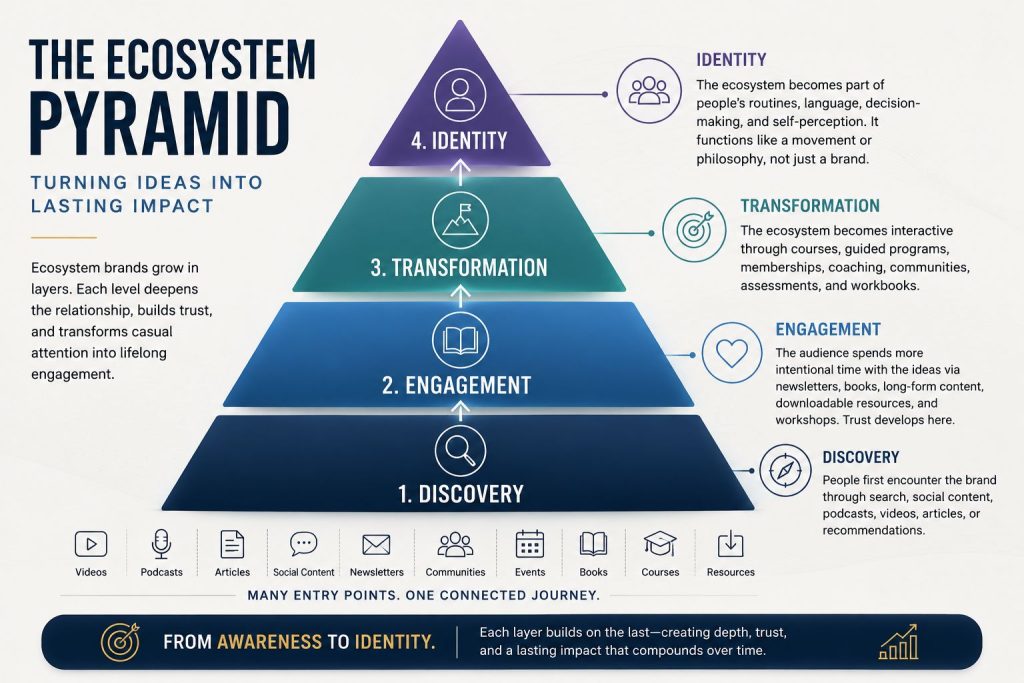
Most ecosystem brands develop in clear layers:
- Discovery: People first encounter the brand through search, social content, podcasts, videos, articles, or recommendations.
- Engagement: The audience spends more intentional time with the ideas via newsletters, books, long-form content, downloadable resources, and workshops. Trust develops here.
- Transformation: The ecosystem becomes interactive through courses, guided programs, memberships, coaching, communities, assessments, and workbooks.
- Identity: At the highest level, the ecosystem becomes part of people’s routines, language, decision-making, and self-perception. It functions more like a movement or philosophy than a simple media brand.
Why Narrative Matters
Every ecosystem tells a story. The strongest ones understand that people remember narratives far more than isolated information. Whether the theme is resilience, reinvention, financial freedom, creativity, or intentional living, the narrative creates emotional cohesion across every format and platform.
Products matter, but the narrative turns a collection of assets into a world.
Ecosystems Create Compounding Attention
Ecosystems work through accumulation rather than campaigns. Articles strengthen podcasts. Podcasts strengthen books. Books strengthen communities. Communities generate new conversations and discovery. Over time, attention compounds instead of resetting with every new piece of content.
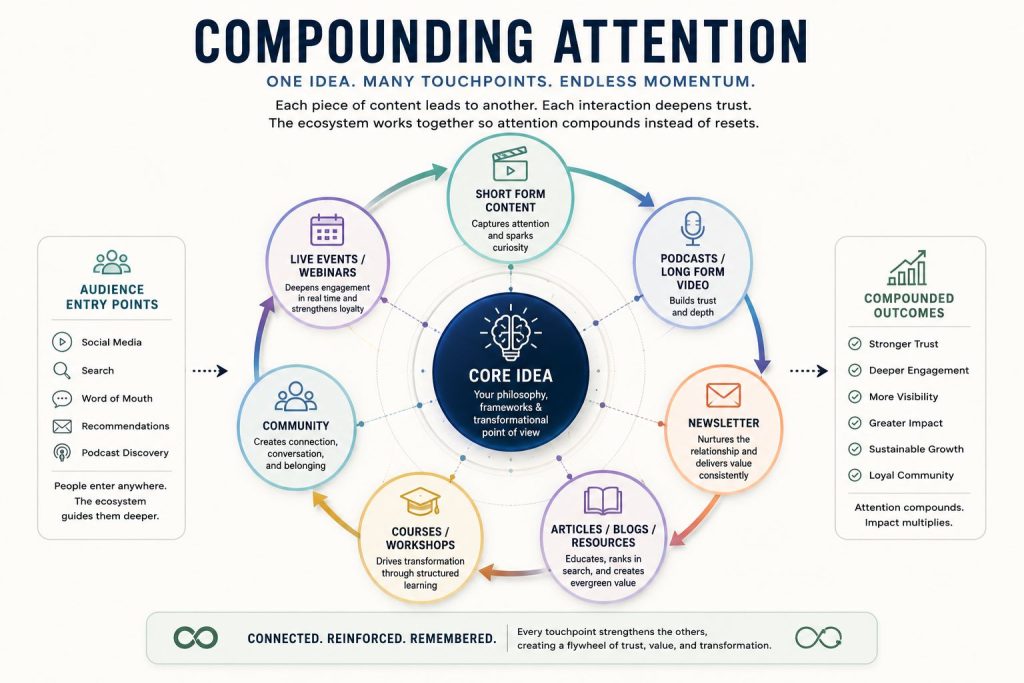
This compounding effect is one of the biggest advantages of a well-designed creator ecosystem and ecosystem marketing strategy. Assets continue feeding the system years after publication.
The Rise of Learning Ecosystems
One of the clearest shifts happening today is the move from passive consumption toward active learning environments. People want structure, guidance, reflection, participation, and transformation — not just information.
This is why layered learning experiences are growing rapidly across business, self-development, creativity, wellness, productivity, finance, philosophy, and health. Reading something once rarely changes behaviour. Interacting with an idea repeatedly through different formats often does.
Tools such as worksheets, guided prompts, learning packs, reflection exercises, assessments, templates, and interactive resources turn passive audiences into active participants. The ecosystem becomes less like a content library and more like a navigational environment that supports real growth.
Why Human-Centered Ecosystems Matter
Many ecosystems today are optimised for scale — more content, more reach, more automation. But scale alone does not create connection. Some highly visible brands still feel strangely empty because the experience feels mechanical.

Human-centered ecosystems feel intentional. People remember how the environment made them feel: thoughtful, clear, grounded, practical, sincere, and emotionally aware. As AI-generated content becomes more common, these human qualities — coherence, emotional intelligence, and genuine usefulness — become increasingly valuable.
Why Smaller Ecosystems Can Still Be Powerful
Ecosystem brands do not require massive audiences. Some of the strongest creator ecosystems operate in specific niches with smaller but deeply engaged communities. Clear positioning, meaningful resources, strong identity, and consistent philosophy often outperform larger but fragmented brands. The internet increasingly rewards depth over generalisation.
The Future of Ecosystem Brands
As content volume explodes, meaning becomes more valuable. People are looking for coherence instead of noise, perspective instead of volume, clarity instead of trend-chasing, and thoughtful structure instead of endless output.
The strongest ecosystem brands of the next decade will not necessarily be the ones producing the most content. They will be the ones creating the most trust.
Common Ecosystem Mistakes
Many creators expand too quickly before clarifying their core philosophy. The result is disconnected products that compete with one another instead of reinforcing a larger identity.
Other common mistakes include treating every platform separately (creating tonal inconsistency), overproducing content until the ecosystem feels industrial rather than intentional, and over-automating human elements like communication and learning experiences. The best ecosystems still leave room for personality, reflection, and human perspective.
Real-World Ecosystem Examples
Mel Robbins built an ecosystem around behavioural change and self-trust. Her books, podcast, speaking appearances, social clips, educational tools, and audience conversations all reinforce the same philosophy.
Marie Forleo developed a creator ecosystem around entrepreneurship, creative confidence, and implementation. Courses, interviews, content, and community all support the same worldview.
Ali Abdaal built a layered ecosystem around productivity, learning systems, creator leverage, and intentional work. Videos lead naturally into newsletters, resources, courses, and broader educational structures.
In each case, one clear philosophy, multiple connected formats, and consistent thematic identity create long-term audience relationships.
Building Ecosystems That Feel Human
This is where creative studios play an increasingly important role in modern ecosystem brand strategy. Traditionally, creative work was divided into isolated categories: graphic design, writing, branding, product development, educational content, and social media.
Ecosystems do not work in silos. Everything affects everything else.
Studios like Lantern Leaves approach ecosystem building through connected experiences rather than isolated deliverables. This includes guided workbooks, learning packs, reflective tools, educational systems, storytelling frameworks, visual ecosystems, digital resources, and structured learning experiences. The goal is not simply visibility — it is usability. Can people engage meaningfully with the ideas? Can they navigate the ecosystem intuitively? Does the experience feel coherent and supportive of real growth?
Conclusion — The Future Belongs to Connected Ideas
Modern audiences no longer simply consume information. They move through ecosystems. They search for structure, meaning, participation, continuity, guidance, and connection.
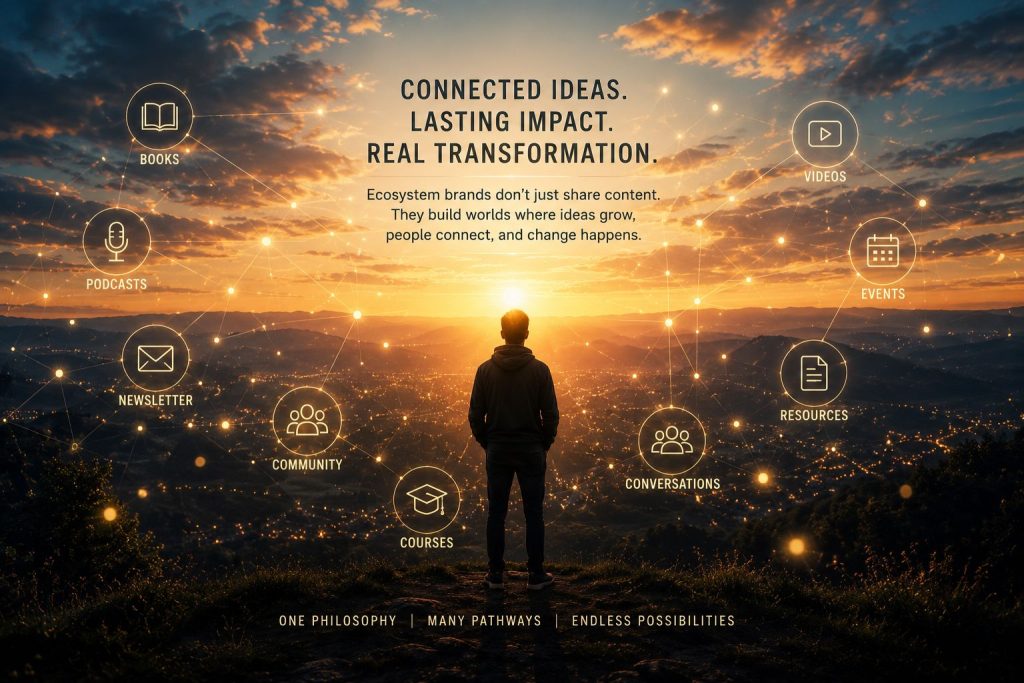
The brands that stand out are often not the largest or loudest, but the ones creating environments people genuinely want to return to. That is what a well-designed ecosystem brand ultimately provides — not just products or content, but a connected, meaningful experience built around a powerful idea.
For creators, educators, authors, studios, and modern businesses, the question is no longer “How do we sell this product?” The more useful question is: “What kind of world are we building around this idea?”
At Lantern Leaves, we help creators and businesses answer that question by designing thoughtful, human-centered creator ecosystems that turn powerful ideas into lasting movements.
Frequently Asked Questions
What is an ecosystem brand? An ecosystem brand is a connected network of products, platforms, content, and experiences built around a central philosophy or idea. Instead of relying on one product or platform, it creates continuity across multiple audience touchpoints through ecosystem marketing and a cohesive creator ecosystem.
How do creators build ecosystem brands? Most creators begin with one clear idea and expand gradually through articles, podcasts, newsletters, courses, communities, workbooks, and educational resources. The strongest ecosystems maintain a consistent message and philosophy across every platform.
Why are ecosystem brands becoming more popular? Ecosystem brand strategy creates deeper audience relationships in a fragmented online environment. It builds trust, reduces dependence on algorithms, and supports long-term engagement in both personal brand ecosystems and broader digital product ecosystems.
What makes an ecosystem different from content marketing? Content marketing often focuses on attracting attention. Ecosystem brands focus on building connected experiences that guide audiences through ongoing engagement, learning, and transformation.
Do ecosystem brands only work for large creators? No. Smaller ecosystems can be highly effective when they have clear positioning, useful resources, thematic consistency, meaningful audience relationships, and strong identity. Depth of engagement often matters more than audience size.
Why are human-centered ecosystems becoming more valuable? As AI-generated and mass-produced content becomes common, audiences increasingly value ecosystems that feel thoughtful, emotionally intelligent, coherent, and genuinely useful.
How can creative studios help build ecosystem brands? Creative studios like Lantern Leaves help creators and businesses develop connected systems through storytelling, educational design, guided resources, visual identity, structured learning experiences, and cohesive ecosystem strategy.